教学设计
Reading: Writing on the INTERNET
曹杨第二中学附属实验中学 吴俊桦
一、语篇研读:
What: 本文是一篇介绍类短文,主要内容从语言学家 McCulloch 的观点出发,从背景介绍、发生变化的方面、引领变化的人群、变化迅速的原因以及对于网络语言未来发展的推测这几个方面开展了详细的介绍。
Why: 作者引用了语言学家的观点,介绍了新时代互联网环境下兴起的非正式语言表达方式及其相关内容并表示这种变化是语言发展的体现且随着时间的推移,语言形式将持续变化、不会停止。文本也能引发读者思考:这种形式上的改变对于语言本身来说究竟是好是坏? How: 本课时的是一篇非典型的说明文,文本结构层次清晰,主题句明确。在教学过程
中,教师将指导学生基于标题与引言判断文体、大致推测文本内容;通过略读以及对于主题句的把握明确文本结构以及主体部分的内容;通过扫读捕捉文本细节信息,加深理解;最后结合本课时所学,表达自己对于该主题的观点。
二、学情分析:
八年级的学生在之前的学习过程中已经初步接触了说明文语篇阅读,例如 8AM2U4 Numbers 以及 8AM2U5 More practice: The giant panda,所以大部分学生对于说明对象的把握、文本结构的梳理以及相关说明方法的使用理应具备一定的基础。通过本课时的学习,希望学生能够进一步明确说明文阅读的路径与要点,梳理文本结构与内容。同时,文本中的生词含量比较大,希望通过引导学生关注上下文以及图片等方式帮助其克服生词障碍。
三、教学目标:
通过本课时的教学,学生能够:
1. 通过略读与扫读,辨识文本体裁,梳理文本结构,明确文本主要内容;
2. 了解介绍类语篇阅读的主要路径,明确在阅读过程中的主要关注点;
3. 围绕“你如何看待互联网语言形式的变化”这一话题表达观点。
四、教学重点:
引导学生使用一定的阅读策略梳理文本结构,明确文本内容。
五、学习难点:
理解文本的细节内容如第二段;根据上下文以及图片提示猜测生词含义。
六、教学环节
| 环节 |
学习活动 |
活动评价 |
|
读前
|
看图片中的句子,回答问题 |
教师根据学生的回答,给予适当的反馈 |
| 设计意图:调动学生积极性与学习兴趣,引入主题,为后续教学环节做铺垫 |
||
|
阅读标题以及引言,回答问题 |
教师记录学生回答,给予适当反馈 |
|
| 设计意图:引导学生关注标题以及引言,初步推断文体并且推测主要内容 |
||
|
读中
|
阅读全文,将文本进行分层 |
教师记录学生回答,带领学生核查答案 |
| 设计意图:帮助学生梳理文本结构,为后续阅读环节做铺垫 |
||
|
阅读文本第一层(第 1 段),回答问题 |
教师根据学生的回答进行追问与引导 |
|
| 设计意图:帮助学生归纳第 1 段的主要内容,明确第一段的作用 |
||
|
阅读文本第二层(第 2-4 段),回答问题 |
教师根据学生的回答进行追问与引导 |
|
| 设计意图:引导学生关注文本中的主题句,明确主体部分的主要内容 |
||
|
分段阅读文本第二层,回答问题 |
教师记录学生回答,给予适当反馈并适时进行追问与引导 |
|
| 设计意图:帮助学生获取文本主体部分的细节信息,加深理解 |
||
|
阅读文本第三层(第 5 段),小组讨论,回答问题 |
教师根据学生讨论的情况,利用提问、追问进行引导 |
|
| 设计意图:帮助学生辨别主题句,明确文本末段的作用 |
||
|
读后
|
回答问题,明确文本说明对象 |
教师根据学生的回答,给予适当的反馈 |
| 设计意图:引导学生基于对全文内容的理解提炼说明对象 |
||
|
小组讨论,回答问题 |
教师记录学生观点,必要时给予适当的引导以及语言支撑 |
|
| 设计意图:引导学生基于文本,结合自己的理解进行观点表达,培养思辨能力 |
||
|
Assignment 1. 围绕“你如何看待互联网语言形式的变化”这一话题,明确观点、进一步完善理由; 2. 阅读作业单中的文本,完成相应任务。 |
||
七、教学内容(worksheet)
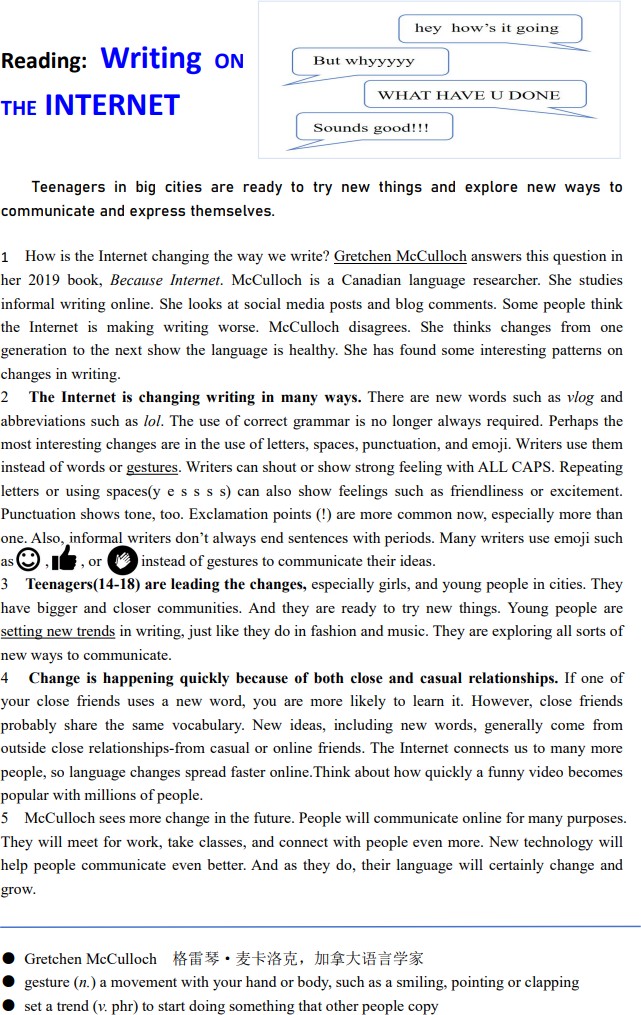
八、作业设计
Homework sheet
Today, people all over the world enjoy watching movies and television. Before movies and television came into being, people didn't have lots of amusements. Instead, they amused themselves at home, or they went to theaters to see plays and performances. Watching performances on stage didn't stop being popular.
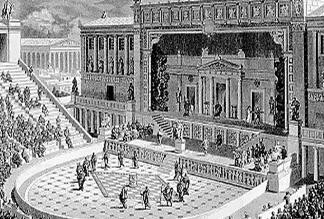
 . There were theaters in Greece more than 2, 000 years ago. Most Greek cities had a theater. Greek plays were funny or sad, but all of them taught important lessons about life. In ancient times, all the actors were men or boys, and there was a chorus-a group of people singing together. Greek plays are still popular today.
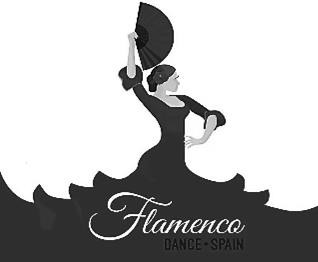
. In Spain, people love watching performances of flamenco (弗拉明戈舞). Flamenco comes from Southern Spain. Usually accompanied (伴奏) by a guitar, and men and women dance. "Palmeros" clap (击掌) in a special way with the dancers. Flamenco music and dance are very attractive. Together, the music and dance tell a story.
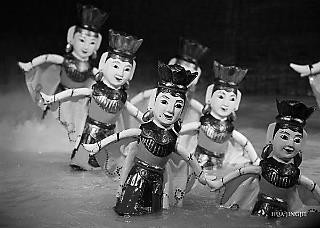 . In Vietnam, people enjoy watching an interesting kind of performance called Mua Roi Nuoc(水上木偶戏). There aren't any actors—only puppets. The puppets are on a stage built above water. People from the Red River Delta began this kind of shows in the 11th century, but people still watch them today. They're magical.
Stage performances entertained(提供娱乐) us through history and they continue to make us
smile or cry although TV and movies are more popular now.
1. What is the passage mainly about? ()
A. different kinds of stage performances
B. the ways people amused themselves long ago
C. people’s life without movies or televisions
D. the history of stage performances
2. Choose the proper topic sentences for paragraph 2, 3 and 4 and fill in the blanks.
3. There are three stages performances mentioned in the passage. What are they? What
are their features (特色)?
| Name of the stage performance |
Features |
|
|
|
|
|
|
|
|
|
*4. Can you write about another kind of stage performance in the world? Tip1: You can surf the Internet for information.
Tip2: Pay attention to the structure of an expository writing.